Writing down what I think about theatre I've seen in That London, whether I've been asked to or not.
Showing posts with label Alexandra Gilbreath. Show all posts
Saturday, 6 May 2023
Theatre review: Cymbeline (RSC / RST)
What better way to mark the Coronation than with Shakespeare's late romance about a forgettable king with a dead first wife and a panto villain second wife? The last time the RSC staged Cymbeline they gender-swapped the King and Queen to avoid the cliché of the wicked stepmother. For Gregory Doran's final show as Artistic Director things stay very much as written, because that particular cliché - and the play's extended collection of weird bad guys in general - feed into the production's feel of a dark fairytale. Peter De Jersey plays Cymbeline, the King of Britain who gets all but written out of his own play when he starts to fall ill, suspiciously soon after the new Queen starts brewing him a mysterious health tonic. Alexandra Gilbreath goes full Cruella as the Queen who also advises that the princess Imogen marry her son Cloten (Conor Glean,) so he can inherit the throne should the King suddenly die for some reason.
Monday, 4 April 2022
Theatre review: The Fever Syndrome
Hampstead Theatre may now be run by Roxana Silbert but some things don't change, and it remains London's main home for That American Play Where An Extended Family Gets Together After A Long Time, Preferably At Thanksgiving But That’s Optional. Silbert herself directs the latest iteration of a play every American playwright seems, for some reason, to be legally obligated to write and just change the character names. The twist is Alexis Zegerman isn't even American so The Fever Syndrome is... a tribute act maybe? It does tick every other box, including the ever-popular Asshole Genius add-on feature, as the excuse for bringing three siblings and their partners to the New York brownstone they grew up in is their father receiving a lifetime achievement award. Richard (Robert Lindsay) is an obstetrician and IVF pioneer, who still bears a grudge against the Republicans for delaying his research on religious grounds, meaning Britain beat America to the first test tube baby.
Saturday, 1 February 2020
Theatre review: The Sugar Syndrome
How do you evoke nostalgia for the fairly recent past? At the moment the sound of a dial-up modem does the trick very effectively, which is handy when the play is a revival of Lucy Prebble's first-produced play The Sugar Syndrome. That sound opening the show clues us in not just to its 2003 setting, but also to what must have been one of the first major plays to look at relationships formed online and, to start with at least, how you might not be getting quite what you were expecting. 17-year-old Dani (Jessica Rhodes) has been using chatrooms to meet people in real life, but some awkward fumbling (how does the props person make stage-jizz anyway, and how do they credit it on their CV?) with the smitten, awkward Lewis (Ali Barouti) turns out not to be exciting enough for her, and her next meeting is more unconventional and potentially dangerous: Pretending to be an 11-year-old boy, she befriends convicted paedophile Tim (John Hollingworth) and arranges to meet him IRL.
Saturday, 11 May 2019
Non-review: The Provoked Wife
Not a review because I'm afraid the curse of Restoration Comedy as directed by anyone-who-isn't-Jessica-Swale strikes again. Under normal circumstances I sit through shows in Stratford-upon-Avon to the bitter end regardless, because I'd only have to wait for my train anyway if I ducked out at the interval, but with today's train schedules all over the place with engineering work I had the chance for an early escape from The Provoked Wife. John Vanbrugh's third play (according to the prologue, in which he apologises for writing so many) opens with the familiar grumbling of Sir John Brute (Jonathan Slinger) about how much he's tired of his wife after two years of marriage. As a result he treats her with such indifference and rudeness that Lady Brute (Alexandra Gilbreath,) who's keen to point out she's never cheated on her husband despite never liking him much, now feels provoked to pursue an affair with his friend Constant (Rufus Hound, mainly delivering his lines when other actors are trying to deliver theirs.)
Sunday, 24 September 2017
Theatre review: The Lie
PREVIEW DISCLAIMER: Official critics are invited this Wednesday.
The critics may well get to see one of the leads performing most of the play script-in-hand as Alexander Hanson, a late replacement for an ill James Dreyfus, was at today’s performance only off-book for two of the play’s scenes. This is for the latest from Florian Zeller, who seems to like his plays to come in pairs: The Truth is followed up by The Lie, another comedy of infidelity, which even has its characters share the names of the earlier play’s quartet (although they don’t actually appear to be the same characters, unless they’re alternate-universe versions.) And as The Truth was about lies, then The Lie is about truths, and passing off the truth as a lie. If that all seems a bit convoluted and circular you should see the actual dialogue, which at one point I thought had actually turned into a real-life version of the famous “loop” scene from The Play That Goes Wrong.
Monday, 17 July 2017
Theatre review: Dessert
Oliver Cotton’s flawed but fun, issue-based thriller Dessert is another of those plays that hinges on a major plot twist, this time coming about 20 minutes in – in fact much of the publicity has revolved around Cotton and director Trevor Nunn tying themselves up in knots trying to discuss the play without actually mentioning what it’s about. So once again I’ll try to keep things vague in the opening paragraph before getting spoilery after the text cut. Certainly the promotional image of an unevenly cut cake gives a clue that we’re in for a story about the 5% who own 95% of the world’s wealth, and Rachel Stone’s set is an opulent dining room whose walls are covered with priceless paintings. This is just another room in the house of Hugh (Michael Simkins,) a company director notorious for liquidating a struggling company causing investors to lose their savings, while he got away with a £5 million bonus. SPOILER ALERT for the rest of the review.
Saturday, 1 October 2016
Theatre review: The Rover, or, The Banish'd Cavaliers
Best-remembered today as England's first female professional writer (although it
turns out in the 19th Century her name was a euphemism for a reet dorty hoor,
society having decided that "female professional writer" wasn't actually something
they were ready for yet, thanks,) Aphra Behn's most famous play is The Rover, or,
The Banish'd Cavaliers. The subtitle sets the action a couple of decades before
the play's writing, during the exile of the prince who would eventually be Restored
as Charles II. His followers, equally unwelcome in England during Cromwell's rule,
had a mixed reputation, seen by some as accomplished soldiers, by others as
thrill-seekers lacking morals. Behn gives us just such a mixed picture - veering
towards the latter - in her quartet of Cavaliers who end up in an unnamed Spanish
town during Carnival season, and intend to make the most of its spirit.
Saturday, 17 October 2015
Theatre review: Richard III (The Wars of the Roses at the Rose Theatre, Kingston)
I don't know if it's John Barton's edit/adaptation or Trevor Nunn's direction (probably a bit of both,) but this trilogy version of The Wars of the Roses seems to be a lot less overtly Lancastrian in sympathy than Shakespeare's four-play original. Not that it's become Yorkist instead, but both sides of the conflict come off about equal in terms of culpability for the lives lost. Richard III is by far the most frequently performed play in the tet as it's considered something of a standalone story, but it definitely benefits in a couple of ways from being seen in context, and one of these is in a titular villain who isn't quite as villainous here: Robert Sheehan's Richard spent Edward IV as the Yorkist enforcer, doing the dirty work that'll get his family into power. Once they've got it, it turns out that the biggest obstacle to keeping it is the family themselves, so he proceeds to turn on them, killing both relatives and former allies.
Theatre review: Edward IV (The Wars of the Roses at the Rose Theatre, Kingston)
Henry VI's queen, Margaret of Anjou (Joely Richardson,) is a figure who looms over the whole of Shakespeare's second historical tetralogy - or in the case of John Barton's War of the Roses edit, trilogy. In Edward IV, the determination and strength she showed earlier in the sequence starts to reach a level of insanity that'll inform much of the climactic play as well. What kicks it off is a deal her husband (Alex Waldmann) makes in an attempt to pacify his Yorkist rivals: He will remain king to the end of his natural life, but the Duke of York (Alexander Hanson) and his sons will be his heirs. As this disinherits their son Edward (played by Freddy Carter's cheekbones,) Margaret won't stand for it; soon she's leading the charge herself, the treaty's forgotten and the wars are back on, bloodier than ever. York won't live to see the crown himself, but it will pass back and forth between Henry, and York's son Edward IV (KÃ¥re Conradi - for the sake of NUNNSTORICAL ACCURACY the king of England is Norwegian.)
Theatre review: Henry VI (The Wars of the Roses at the Rose Theatre, Kingston)
I don't know why, but I just get the impression that Trevor Nunn favours the white roses.
A Shakespearean epic in Kingston (Jamaica? No, she went of her own accord) as Trevor Nunn looks back at one of the most famous productions from the RSC's history - The Wars of the Roses. John Barton adapted the second tetralogy (first in order of writing) of Shakespeare's Histories into a trilogy, combining the three Henry VI plays into two, and topping off the event with Richard III. Nunn credits Peter Hall's original production with inspiring his own theatrical career, and so revives the sequence as a tribute both to him, and to Barton's editing work. The trilogy has been slightly overshadowed, deservedly, by controversy, as Nunn has deliberately eschewed colour-blind casting, claiming on the one hand that an all-white cast is more historically accurate, and on the other that audiences will find it easier to follow the complex family trees if all members of a family are the same race.
Friday, 10 July 2015
Theatre review: The Invisible
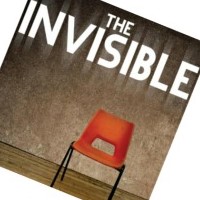
The Bush Theatre's skylights and lack of air-conditioning make it one of the least comfortable London theatres during the hotter months, so its summer show needs to be something that can distract from this. It managed it flamboyantly in 2013 with Josephine and I, and with family tensions as heated as the atmosphere in 2014's Perseverance Drive, but this year's offering is a much drier affair, and I'm still not sure what - except the vague, as it turns out false suggestion of a cliffhanger - even brought me back to The Invisible after the interval. It's not for lack of an important topic: Rebecca Lenkiewicz's play looks at the brutal government cuts to Legal Aid, which in the Magna Carta anniversary year seem to break one of that document's major tenets, that Justice is not to be either bought or denied. But three of the characters in The Invisible can't pay for justice, so they may have to go without: Aisha (Sirine Saba) is an Indian arranged bride being beaten and restrained at home by her husband and his family; Ken (Nicholas Bailey) is being denied access to his children.
Saturday, 3 November 2012
Theatre review: The Merry Wives of Windsor (RSC / RST)
The RSC's big Christmas show this year is an all-guns-blazing Merry Wives of Windsor, although the seasonal feel is more Halloween - complete with jack o'lantern in a window - than Christmas. Phillip Breen's modern dress production comes straight out of the pages of Country Life, with wives in scarves and high-heeled wellies, and huntin', shootin', rugger-playing husbands. Legend has always had it that Elizabeth I herself requested that Shakespeare write The Merry Wives of Windsor, wanting to see Falstaff in love. If that old story were true, Shakespeare would probably have met with a sticky end because that's not what's provided here: Instead the fat old knight from Henry IV is very much in lust, with two married, upper-middle-class women. They're better friends than he realised though, and on discovering he's sent them both identical love letters decide to lead him on, and into embarrassing and increasingly public mishaps.
Tuesday, 7 February 2012
Theatre review: Shallow Slumber
Taking its cue from a notorious case from a few years back, which saw the media clamouring for social workers to blame and sack, Shallow Slumber by playwright and social worker Chris Lee tries to give an insight into the much-maligned profession. Director Mary Nighy has the action staged in traverse, a sensible choice for a series of often confrontational scenes between two women. Playing out in reverse, we see Dawn (Amy Cudden) unexpectedly arrive at Moira's (Alexandra Gilbreath) house. Moira used to be her social worker several years ago, but a terrible event ended their relationship, and resulted in Moira's sacking. Even though she's asking for help Dawn's attitude is defensive, and as we go back we see this has never changed much, right back to when she was a former crack addict whose new baby Social Services were monitoring. Nighy keeps the action very understated which helps produce an intense, powerful effect, and the two performers are just excellent.
My sister's flatmate Amy is a social worker and saw tonight's performance. She liked the show but did say that Moira said a lot of things a real social worker would never say, such as listing her qualifications to her client. I don't mind things like that, after all you need to get certain information out to an audience, not all of whom are going to have a background in the subject. Dawn's dialogue was more problematic to me - I asked Amy if she'd ever dealt with such an erudite crack whore. Given the naturalistic tone of the piece, her language is just too eloquent to feel real; I kept expecting the twist where she'd first got hooked on crack at Roedean. Cudden's accent and performance are the only things differentiating her speech from the more middle class Moira, Lee's contribution is mainly the occasional "fuck" and "cunt" to make her sound a bit council. I found this distracting, but not enough to spoil a powerful and disturbing play.
I didn't ask Amy how she felt about the script referencing two characters with her name, BOTH OF THEM DEAD, but I'm going to assume she was basically thrilled about it.
Shallow Slumber by Chris Lee is booking until the 18th of February at Soho Theatre Upstairs.
Running time: 1 hour 30 minutes¹ straight through.
¹I'm including the ten minutes' delay starting in the total running time, because I know if I'm checking it in advance I'm probably trying to time my journey home, so how long it would run if it started on time isn't particularly useful. So if you check on here I'll give you how long you're actually likely to be in the theatre, especially with persistent offenders like Soho, who tend to treat GMT as more of a suggestion.
My sister's flatmate Amy is a social worker and saw tonight's performance. She liked the show but did say that Moira said a lot of things a real social worker would never say, such as listing her qualifications to her client. I don't mind things like that, after all you need to get certain information out to an audience, not all of whom are going to have a background in the subject. Dawn's dialogue was more problematic to me - I asked Amy if she'd ever dealt with such an erudite crack whore. Given the naturalistic tone of the piece, her language is just too eloquent to feel real; I kept expecting the twist where she'd first got hooked on crack at Roedean. Cudden's accent and performance are the only things differentiating her speech from the more middle class Moira, Lee's contribution is mainly the occasional "fuck" and "cunt" to make her sound a bit council. I found this distracting, but not enough to spoil a powerful and disturbing play.
I didn't ask Amy how she felt about the script referencing two characters with her name, BOTH OF THEM DEAD, but I'm going to assume she was basically thrilled about it.
Shallow Slumber by Chris Lee is booking until the 18th of February at Soho Theatre Upstairs.
Running time: 1 hour 30 minutes¹ straight through.
¹I'm including the ten minutes' delay starting in the total running time, because I know if I'm checking it in advance I'm probably trying to time my journey home, so how long it would run if it started on time isn't particularly useful. So if you check on here I'll give you how long you're actually likely to be in the theatre, especially with persistent offenders like Soho, who tend to treat GMT as more of a suggestion.
Subscribe to:
Posts (Atom)


