Writing down what I think about theatre I've seen in That London, whether I've been asked to or not.
Showing posts with label Kate Duchêne. Show all posts
Wednesday, 4 January 2023
Theatre review: Watch on the Rhine
My first theatre trip of 2023 is to the Donald and Margot Warehouse. It's the show I'd actually planned to open the year with, and that in itself is one up on last year (which started with a bunch of cancelled and hastily-rescheduled performances from 2021.) I went into Lillian Hellman's Watch on the Rhine knowing very little about it beyond the vague blurb on the website, and frankly being able to go in and be surprised is my ideal way to see a show. That blurb promised a German-American family taking in German relatives during the Second World War, before the USA had officially picked a side, so I was prepared for some queasy revelations about where the family's sympathies lie. Instead Hellman has a more defiant message in mind, and director Ellen McDougall delivers a tense domestic thriller about the moral ambiguities of heroism.
Thursday, 24 February 2022
Theatre review: Henry V (Donmar Warehouse)
PREVIEW DISCLAIMER: Yet another show where the press night has been pushed back due to some preview performances having to be cancelled.
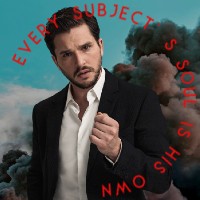
Welp, a grimly appropriate day to go see a show about a country being invaded because a neighbouring ruler has a sense of entitlement to it. The first Shakespeare production under the Donald and Margot Warehouse's current team sees Max Webster take on Henry V, with Kit "Christopher" Harington in the title role. Webster's production actually begins by taking us back to the Henry IV plays that precede it, and showing us Harington's Hal partying with thieves and cutthroats, before receiving news of his father's death. Foreshadowing events in the play itself, we see him refuse to make the promises of leniency for thieves his friends ask for, before ascending the throne and coldly rejecting his former close companion Falstaff (Steven Meo.) Once in power Henry wastes no time in making it clear his interests as king lie in expansion, specifically in building a spurious case for being rightful ruler of France. He makes demands that are inevitably rejected, and begins his invasion.
Monday, 26 December 2016
Theatre review: Hedda Gabler
Having played a part in Lazarus existing, Ivo van Hove has a chance to redeem himself with the classic reinterpretations he does best. He brings a production he originally staged at his own theatre to the National, as Ibsen's Hedda Gabler gets a new translation by (inevitably) Patrick Marber, and Ruth Wilson plays Hedda, married for six months and already deeply regretting it. The daughter of a celebrated and wealthy general, she grew up the centre of attention, including from numerous male suitors. After telling a series of seemingly innocuous lies, and in a sudden moment of paranoia about getting older, she agreed to marry the academic Tesman (Kyle Soller.) By the end of their extended honeymoon she's realised she'll never care about the esoteric subjects her husband fixates on, while he'll never be able to keep her in the style she's accustomed to unless he gets a professorship.
Tuesday, 12 May 2015
Theatre review: Everyman
If the first show programmed by the new Artistic Director was anything to go by, we would have been in for a dull time at the National Theatre over the next few years, but we've got something more interesting - if eccentrically so - in the first play Rufus Norris has taken on to direct himself. It may be a new era but Norris goes right back to the beginning of extant English theatre with the mediaeval morality play Everyman, "Ev" to his friends in this new version by Carol Ann Duffy. Chiwetel Ejiofor plays Ev, whom we first meet tumbling through the air to the stage in slow motion, in what could be a symbolic Fall of Man but turns out to be somewhat more prosaic: An accident after a coke-fuelled 40th birthday party. Death (Dermot Crowley) arrives to tell him his time is up, and soon Ev will need to make a reckoning with God (Kate Duchêne,) and justify the way he's lived his life.
Friday, 17 October 2014
Theatre review: The Cherry Orchard
Katie Mitchell uses a new translation by Simon Stephens to present a streamlined version of Chekhov's final full-length play at the Young Vic. The Cherry Orchard's action takes place over a few months, a comparatively short period for Chekhov, made to feel even shorter in just under two hours without interval. Ranevskaya (Kate Duchêne) returns to the country estate she grew up on after a long absence. While her family's old money has been dwindling, their estate manager Lopakhin (Dominic Rowan,) the son of serfs, has been gradually amassing a fortune of his own, and has some ideas about how they can keep their land. Too absorbed in their own personal dramas, though, and unwilling to face the prospect of change, Ranevskaya and her family ignore his warnings until it's too late.
Thursday, 26 January 2012
Theatre review: The Trial of Ubu
Though I'd heard of absurdist classic Ubu Roi I've never seen it, so had a quick online search about it before going to see Simon Stephens' sequel of sorts, The Trial of Ubu. In fact Stephens opens his play with a recap, in puppet form, of Alfred Jarry's play and the fictional dictator's crimes, which gives us the background, as well as allaying the fears of anyone worried that the dog from the Family Ties end credits had been put on trial. This Punch and Judy show is an apt way to tell the crimes of Ubu, the original play having been a satire with a decidedly juvenile side (Jarry started writing it aged 15.) Stephens' twist is to have Ubu tried at the International Criminal Court, the century since the original play having furnished us with real life dictators whose atrocities make him seem less far-fetched.
Stephens teams up with director Katie Mitchell again, and although Ubu himself (Paul McCleary) does appear, it's only very briefly. Instead we almost entirely experience the trial through a pair of translators in their booth (Kate Duchêne and Nikki Amuka-Bird.) I can see how this approach will alienate people who feel robbed of the courtroom drama, but it's certainly an effective way of making the audience view the dark events described from a Brechtian distance. It also means we get a glimpse of how hearing these things recounted day in day out affects people just doing their job. It's a huge ask for the two actresses, Duchêne and Amuka-Bird carry the show not only by speaking out the dialogue of Ubu, his wife, his various generals and victims as well as all the legal teams, but also by giving us an idea of the personalities of characters who have no dialogue as themselves. We do get a glimpse of Ubu himself with his jailer (cute Rob Ostlere) as well as a couple of lawyers (Josie Daxter and George Taylor) disillusioned with the process itself, and so Stephens asks questions about who exactly these things are meant to be for. The opening puppet show proves to have been a good idea as we hear how grotesque comic horrors translate into reality - most notably a gag involving people being chucked down a trapdoor, and what that turns into once taken literally.
With such a strong conceit in the play itself Mitchell doesn't overburden the production with more big ideas but has gone for attention to detail in a clear presentation, the matter-of-factness echoed by Lizzie Clachan's set which extends the Hampstead Theatre's wood panel decor onto the stage. The huge chunks of speech by just two actresses do mean that despite their efforts there were occasional dips in my interest, but considering the format this was a surprisingly small percentage of the time. I can easily see why people might hate this piece (tonight's half-empty theatre was reminiscent of the "bad old days" of two years ago; I could make a comment about the consequences of Hampstead unceremoniously ditching their early booking incentive after a single hit season but.... I just basically did.) But while I wouldn't rush to see The Trial of Ubu again, I'm glad I did go.
The Trial of Ubu by Simon Stephens is booking until the 25th of February at Hampstead Theatre.
Running time: 1 hour 20 minutes straight through.
Sit, Ubu, sit. Good dog.
Stephens teams up with director Katie Mitchell again, and although Ubu himself (Paul McCleary) does appear, it's only very briefly. Instead we almost entirely experience the trial through a pair of translators in their booth (Kate Duchêne and Nikki Amuka-Bird.) I can see how this approach will alienate people who feel robbed of the courtroom drama, but it's certainly an effective way of making the audience view the dark events described from a Brechtian distance. It also means we get a glimpse of how hearing these things recounted day in day out affects people just doing their job. It's a huge ask for the two actresses, Duchêne and Amuka-Bird carry the show not only by speaking out the dialogue of Ubu, his wife, his various generals and victims as well as all the legal teams, but also by giving us an idea of the personalities of characters who have no dialogue as themselves. We do get a glimpse of Ubu himself with his jailer (cute Rob Ostlere) as well as a couple of lawyers (Josie Daxter and George Taylor) disillusioned with the process itself, and so Stephens asks questions about who exactly these things are meant to be for. The opening puppet show proves to have been a good idea as we hear how grotesque comic horrors translate into reality - most notably a gag involving people being chucked down a trapdoor, and what that turns into once taken literally.
With such a strong conceit in the play itself Mitchell doesn't overburden the production with more big ideas but has gone for attention to detail in a clear presentation, the matter-of-factness echoed by Lizzie Clachan's set which extends the Hampstead Theatre's wood panel decor onto the stage. The huge chunks of speech by just two actresses do mean that despite their efforts there were occasional dips in my interest, but considering the format this was a surprisingly small percentage of the time. I can easily see why people might hate this piece (tonight's half-empty theatre was reminiscent of the "bad old days" of two years ago; I could make a comment about the consequences of Hampstead unceremoniously ditching their early booking incentive after a single hit season but.... I just basically did.) But while I wouldn't rush to see The Trial of Ubu again, I'm glad I did go.
The Trial of Ubu by Simon Stephens is booking until the 25th of February at Hampstead Theatre.
Running time: 1 hour 20 minutes straight through.
Sit, Ubu, sit. Good dog.
Subscribe to:
Posts (Atom)


