Pages

Showing posts with label Richard Cant. Show all posts

Thursday, 5 December 2024

Theatre review: The Importance of Being Earnest

Oscar Wilde's famous comedy about an imaginary friend who seems to have a busier social life than any of the "real" characters is one I do think is very funny, but it's produced so often and the aphorisms are so famous that it's hard to be surprised by it. So I need a good excuse to see any particular production. Max Webster's new revival of The Importance of Being Earnest has a big selling point in that it's always a big deal when the current Doctor takes to the stage, but what sold it for me was that Ncuti Gatwa was just part of a cast heavy on openly LGBTQ+ stars. The rather dubious "fact" that keeps getting rolled out for this play's title is that "Earnest" was a private Victorian code for gay people to identify each other, like an early version of Polari. The fact that I've never seen this referenced in any other context makes me suspect the only real pun in the title is the one that's right there in the last line of the play, but I did think we might be in for a version that focuses on the campness of the characters, and the metaphor in their double lives.

Friday, 24 May 2024

Theatre review: Twelfth Night, or What You Will
(Regent's Park Open Air Theatre)

Well it's a good job I'm already more than familiar with the plot of this one, because any show featuring Nicholas Karimi as a sugar daddy in a low-cut top is going to be a tricky one to remember anything else about. Drew McOnie's first season of programming at Regent's Park Open Air Theatre starts with Twelfth Night, but it does share a thematic connection with his predecessor's final production, La Cage Aux Folles: Owen Horsley sets his production in a faded cabaret club, and even gives us a drag queen version of Sir Toby Belch. If the club's not heaving with customers it's probably because the owner, Olivia (Anna Francolini) has imposed a lengthy period of mourning for her dead brother, whose ashes she carries around with her everywhere, addressing her soliloquies to the urn. One regular patron is Orsino (Raphael Bushay,) who's performatively in love with Olivia, and keeps hoping despite all signs to the contrary that he might be able to woo her.

Thursday, 12 October 2023

Theatre review: What It Means

American screenwriter, journalist and novelist Merle Miller became a major figure in the gay rights movement largely - if this adaptation of his most famous essay and subsequent memoir is to be believed - by accident. A decorated World War II veteran who'd been blacklisted by McCarthyites and returned his medals in protest at the Vietnam War, he'd been a fervent but understated kind of radical. When James Corley’s What It Means first joins him, he’s holed up in his rural New York State house on the day of one of the first post-Stonewall gay rights marches in Manhattan: It’s close enough for him to join easily, but he doesn’t think that’s his kind of activism. But in 1970 Harper’s Magazine, of which he’d been editor before getting, he implies, pushed out, publishes a lengthy article about sexuality by a straight writer.

Thursday, 8 December 2022

Theatre review: Orlando

With the changing understanding of gender, and the arrival of bankable non-binary stars like Emma Corrin in recent years, it's not surprising if this seems an apt time to revisit Virginia Woolf's original gender-bending story, Orlando, on stage. The aristocratic Orlando (Corrin) is born during the reign of Elizabeth I (Lucy Briers,) who toys with the idea of recruiting the then 15-year-old boy to her court. As he grows up, he remains close to the seat of power, but the kings and queens seem to change constantly, as Orlando ages much more slowly than he should. So by the time Charles II is on the throne the nobleman is only 30, and takes a job as ambassador to Constantinople. Having spent his life avoiding settling down with one person because that life doesn't offer answers to his many and vague questions about the universe, he continues a life of wine and women - until his sudden death.

Saturday, 23 April 2022

Theatre review: Henry VI: Rebellion (RSC / RST)
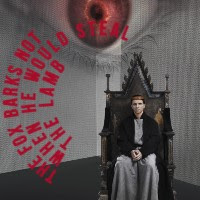
After a couple of years kept away from Stratford-upon-Avon by Miss Rona, followed by a further delay caused by Miss Eunice, it is at least apt timing that I should return to the RSC on Shakespeare's birthday. And, leading up to the end of Gregory Doran's tenure there and the conclusion of his staging the Complete Works (some exclusions apply, the amount of plays we say Shakespeare wrote may go down as well as up) that began with Richard II, the inevitable end point was the series of Henry VI plays leading up to Richard III. The play usually known as Henry VI Part 1 is probably Shakespeare's least-loved work and the company must have been dreading having to convince people to come see it, so they used the excuse of lockdown to present it as a streamed rehearsed reading, aka Let's Not Stage It And Say We Did. Which does have the added advantage of being able to skip ahead and present a trilogy of plays that were actually intended as such.

Tuesday, 28 September 2021

Theatre review: The Normal Heart

A couple of years ago the National Theatre scored one of the biggest hits of the RuNo era with its revival of the iconic American AIDS play, Angels in America. Now the reconfigured Olivier plays host to an earlier work that it's probably safe to say is the seminal work of the genre. First seen in 1985, Larry Kramer's The Normal Heart never actually mentions AIDS - not out of any artistic choice, but because we're dealing with a time when the authorities were loath to admit there even was a disease that seemed to be targeting New York's gay men, let alone give it a name. Far from the magical realism of Tony Kushner's epic, Kramer's play deals very much with the down-to-earth. And while Vicki Mortimer's set is dominated by a memorial eternal flame for the victims, and the play is far from short on heartbreak, the main emotion is anger and frustration at a bureaucratic brick wall; one that seems increasingly purpose-built to help purge Reagan's America of a population it would rather see the back of.

Monday, 10 June 2019

Theatre review: Wife

We're going to be seeing a lot of Ibsen's A Doll's House in the next year or so as various theatres have programmed new interpretations on the classic story that gave its heroine an agency and independence that was scandalous at the time. But before that at the Kiln Samuel Adamson offers up several Noras in one, as Wife tells a story of queer history that sees several generations - from 1959 to the 2040s - take inspiration from her. It comes down to Daisy (Karen Fishwick,) who recently married Robert (Joshua James) to please her father, only to fall in love with actress Suzannah (Sirine Saba.) When she takes her husband to see Suzannah play Nora she knows she's got a similar big decision to make, but she ends up sticking with what society expects of her. We then jump to 1988, and though we don’t see Daisy, from what we hear of her the decision proved catastrophic: A lonely alcoholic, she's estranged from her only son Ivar (James.)

Wednesday, 27 March 2019

Theatre review: After Edward

As the name suggests, Shakespeare’s Globe is and always will be most associated with reviving work by Shakespeare and his contemporaries. But they’ve always included some new writing in the mix, and a year into her tenure as Artistic Director I’m wondering if that’s what’s going to define Michelle Terry’s time there. Granted, there’s been one honking error of judgement in Eyam, but Emilia has just transferred to the West End and a second raft of good reviews, and now Edward II gets a companion piece written by its lead actor, which certainly speaks to Terry’s nose for trying something new. Tom Stuart’s After Edward takes place not only immediately after Marlowe’s play, but specifically after Nick Bagnall’s production that’s still playing in repertory. So the room’s in total darkness when recently-deceased Edward (Stuart) falls through the trapdoor in the ceiling onto the Swanamaker stage, and Richard Bremmer’s Archbishop of Canterbury makes sure he’s OK and helps him light the candles before reverting to character and berating him for his sexuality.

Thursday, 14 February 2019

Theatre review: Edward II

The second winter mini-season at the Swanamaker takes the theme of kings who were deposed, opening with Christopher Marlowe’s take on the subject; later in the season we’ll have Shakespeare’s response to it, as well as a more modern take. But first Edward II, the 1592 play that Ian McKellen is praising on his current UK tour as the first English play with an openly gay protagonist. It’s something that productions in more prudish eras must have tried to downplay – I imagine the whole LOOK THEY JUST DON’T LIKE FLATTERERS, OK? thing would have been made a big deal of – but it must have been a stretch, because it’s hardly subtext. Nick Bagnall’s production certainly doesn’t leave much room for doubt as to why, as soon as Edward II (Tom Stuart) takes the throne, his lords and ministers immediately take so violently against him.

Wednesday, 21 December 2016

Theatre review: Saint Joan

When other actors have had Hollywood commitments this year, Gemma Arterton's turned them into opportunities: When Gugu Mbatha-Raw couldn't make the transfer of Nell Gwynn she stepped in, and now that Cush Jumbo's one-season stint on The Good Wife has turned into a spin-off, she's left another juicy lead free for Arterton to grab with both hands, taking over as Bernard Shaw's Saint Joan at the Donmar. Following Henry V's military success, much of France is ruled by England, and though they fight back the odds always seem to be against the French army. That's until Joan's combination of guileless charm and forcefulness makes them take the gamble of letting a young girl who claims to hear the voices of saints, take command of the military. She quickly does everything she promised, getting the Dauphin (Fisayo Akinade) his overdue coronation, and control of much of his country. But with her job done, Joan is a liability.

Tuesday, 14 July 2015

Theatre review: The Trial

In the past I've left a Richard Jones production at the Young Vic at the interval, but for his new show he's found a cunning way to prevent that: The Trial doesn't have an interval. Nick Gill adapts Franz Kafka's surreal nightmare of bureaucracy in which, after a drunken night out, Josef K (Rory Kinnear) wakes up on the morning of his birthday to find a group of officials at his flat - at least he assumes they're officials, they have no documentation to show him. But they do tell him he has to prepare to go on trial, although neither he nor the court must know what he's being accused of. Over the next year he is required to attend hearings at unspecified times and places, complete endless paperwork and make deals with shady bureaucrats. Initially dismissing the accusations as a joke, he becomes increasingly paranoid as everyone he meets seems to know about the trial and take it very seriously.

Wednesday, 6 August 2014

Theatre review: My Night With Reg

A classic gay play follows an adaptation of Russian literature in the Donmar Warehouse's consistently eclectic programming. First seen in 1994 and surprisingly rarely revived since, Kevin Elyot's My Night With Reg was a breakthrough as a play with all-gay characters that became a West End hit and is, certainly among those I've seen, one of the best of the late-'80s and '90s plays dealing with the impact of AIDS (a disease that's never named here.) Elyot's tragicomedy is at heart the story of three friends who were close at university, but in the decade or so since graduating haven't been great at staying in touch: Guy (Jonathan Broadbent) is having a housewarming for the flat he's just moved into alone, and has invited John (Julian Ovenden,) after a chance meeting. He doesn't expect John to show up but he does, awkwardly reigniting the unrequited love Guy always had for him.