Pages

Showing posts with label Vicki Mortimer. Show all posts

Thursday, 11 July 2024

Theatre review: Alma Mater

Is it something that personally targets just me, or does the Almeida have a particularly unlucky track record of illness among its actors? I worked out that over the last eight years I've had to reschedule three shows there, miss one entirely, and have one performance meant to be a few weeks into the run turn into an early preview after the original star was replaced. The only comparable run of bad luck I can remember is when any RSC actor who went anywhere near a bicycle was guaranteed at least one fracture. Come to think of it that was around the time current Almeida boss Rupert Goold was at the RSC. Has Gooldilocks been a jinx all along? Making that third entry onto the list of rescheduled visits is Kendall Feaver's Alma Mater which had to replace original star Lia Williams with Justine Mitchell at short notice. Additionally, Nathalie Armin was indisposed today, so the supporting role of Leila had to be read in by Assistant Director Connie Trieves tonight.

Thursday, 21 March 2024

Theatre review: Nye

The second major show about the founding of the National Health Service currently playing in London, Tim Price's Nye ends up pretty much where Lucy Kirkwood's The Human Body began: With the NHS about to be born out of a seemingly impossible, looming deadline, and Britain's doctors only at the last minute putting their voices behind this complete shakeup of their profession. In fact the play seems to squeeze this major event in with almost as much urgency, serving at it does predominantly as a broader biography of the Welsh politician whose brainchild the service was, and who pushed it through opposition from all sides. We meet Aneurin Bevan (The Actor Michael Sheen) in need of the service himself, on his deathbed - though he doesn't know that - on an NHS hospital ward.

Tuesday, 14 March 2023

Theatre review: Medea
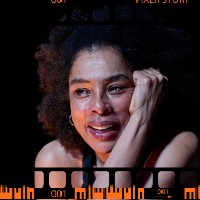
Back to @sohoplace, the theatre with a name so current it's been proudly wearing its new Central Perk T-shirt out in public, where Sophie Okonedo takes on Medea, and a procession of male antagonists all played by Ben Daniels. Dominic Cooke's production has a modern design by Vicki Mortimer, but the 1946 adaptation by Robinson Jeffers is a pretty faithful one to Euripides' original, both in story and style. And while I don't necessarily have a problem with the very loose adaptations of Greek tragedy that have been popular lately, it's interesting to see a production that sticks to basics but still feels fresh. When the Argonauts reached their destination in Colchis, local princess Medea fell for their leader Jason, and helped him steal the Golden Fleece from her father. In their subsequent travels she continued to help him out of scrapes - I'd say "by any means necessary," but that implies disembowelling a relative was a last resort, whereas for Medea it's usually Plan A.

Thursday, 10 November 2022

Theatre review: Good

John Halder (David Tennant) is a University literature professor and author of a few well-received novels, whose generally happy life does bring him a few causes for stress: His elderly mother has lost her eyesight and is struggling to cope on her own; his best friend, the Jewish psychotherapist Maurice (Elliot Levey) is as neurotic as any of his patients and insists on trying to analyse John whenever they meet; and he's seriously considering leaving his wife Helen (Sharon Small) for one of his students. At least his professional life is going well, as he's a rising star of the Nazi party. Dominic Cooke's production of CP Taylor's Good finally makes it to a West End stage on the third attempt*, and like any play chosen for its uncomfortable topicality the precise moments that chime with recent events may have changed slightly in two years, but the overall relevance remains.

Thursday, 9 June 2022

Theatre review: The Glass Menagerie

I'm sure the likes of A Streetcar Named Desire and Cat on a Hot Tin Roof beat it in terms of name recognition, but in my experience The Glass Menagerie is the most frequently-produced Tennessee Williams work; the latest take on it makes five productions I've seen. It was the first Williams play I saw on stage and remains my favourite, although Jeremy Herrin's production seems determined to change that: As lifeless hatchet-jobs on beloved classics go it's not quite on a par with Mark Rylance's energy-sapping Much Ado, but it does share some of that sense of someone just plopping the play onto the stage, and walking away shrugging. In a play whose autobiographical nature is barely disguised, a cramped 1930s St Louis apartment houses what's left of the Wingfield family, scraping by ever since the father abandoned them. Williams' avatar Tom (Tom Glynn-Carney) works in a soul-destroying warehouse job by day, and spends his nights "at the movies."

Tuesday, 28 September 2021

Theatre review: The Normal Heart

A couple of years ago the National Theatre scored one of the biggest hits of the RuNo era with its revival of the iconic American AIDS play, Angels in America. Now the reconfigured Olivier plays host to an earlier work that it's probably safe to say is the seminal work of the genre. First seen in 1985, Larry Kramer's The Normal Heart never actually mentions AIDS - not out of any artistic choice, but because we're dealing with a time when the authorities were loath to admit there even was a disease that seemed to be targeting New York's gay men, let alone give it a name. Far from the magical realism of Tony Kushner's epic, Kramer's play deals very much with the down-to-earth. And while Vicki Mortimer's set is dominated by a memorial eternal flame for the victims, and the play is far from short on heartbreak, the main emotion is anger and frustration at a bureaucratic brick wall; one that seems increasingly purpose-built to help purge Reagan's America of a population it would rather see the back of.

Saturday, 3 July 2021

Theatre review: Bach & Sons

The Bridge Theatre's large, easily flexible auditorium, together with Nicholas Hytner's contacts meaning he could quickly bring in many small-scale shows that could play to diminished capacity without breaking the bank, meant that during 2020's two false starts coming out of lockdown it became my most visited venue. The socially distanced seating remains but the programming has gone back to business as usual, with a play that allows Simon Russell Beale to combine his acting day job with his side hustle presenting documentaries about choral music. In Nina Raine's Bach & Sons he plays Johann Sebastian Bach, the most successful and best-remembered of many generations of composers, although in the years covered by the play that doesn't look like it'll be the case: He correctly predicts that his death will be a great career move as he'll get reevaluated, but at the time his meticulous, mathematical musical style is going out of fashion.

Saturday, 15 February 2020

Theatre review: The Visit, or,
The Old Lady Comes To Call

After Angels in America was a transatlantic success for the National Theatre twice over, it's no surprise if they're keen to bring Tony Kushner back to their stages; the Olivier this time, and instead of an original story it's for an adaptation of Friedrich Dürrenmatt's obscure 1956 play The Visit, or, The Old Lady Comes To Call; but one thing that definitely hasn't changed is Kushner's determination that, once he's got the audience through the doors, he's going to keep them there as long as humanly possible. And while it doesn't fly quite as far into the realms of magic realism as his most famous work, this play - essentially an extended fable on debt of many different kinds - is full of oddities. It takes place over a few days in 1955 in the town of Slurry, New York State, once a manufacturing hub but now collapsing, its various businesses sold up to unseen buyers and liquidated years ago, and now reduced to selling the church bells for scrap metal.

Saturday, 25 May 2019

Theatre review: Anna

On the one hand, it's disappointing to have a show at the National where cheap tickets are very thin on the ground; on the other, I can't complain if this is part of a new policy not to sell Dorfman side seats if they offer no view of the stage whatsoever. The reason you need to watch Anna head-on or not at all is that Vicki Mortimer's set is entirely behind a letterbox of sound-proof glass. This is because Ella Hickson's play is co-created with star sound designers Ben and Max Ringham, and making sure the audience hears, through headphones, only exactly what the creatives want them to hear is at the heart of the show. This is another show built on binaural sound, and the technology has obviously now progressed to the point that it can be made portable. And so everything we hear comes from the perspective of Phoebe Fox's titular character as she walks around her East Berlin flat.

Thursday, 7 September 2017

Theatre review: Follies

Follies is probably the best-known Stephen Sondheim musical I hadn’t yet seen, and the sheer scale of Dominic Cooke’s production at the National suggests why it’s a risky proposition for any smaller theatre to take on. Between 1918 and the early 1940s, Weismann’s Follies were a Broadway staple, but the story takes place in 1971, and the theatre where they played is being demolished to make way for offices. On the building’s last night, Weismann invites the show’s former stars to the site for a farewell party and to reminisce about their time in the limelight. In Vicki Mortimer’s striking design the theatre is already half-demolished, and what remains of it is haunted by the ghosts of the characters’ younger selves, who recreate the routines from their heyday, and watch the people they’ll turn into in curiosity and sometimes horror.

Thursday, 28 July 2016

Theatre review: The Plough and the Stars

Following the Globe giving The Taming of the Shrew a new setting, the National Theatre has its own production to mark the centenary of Ireland's Easter Rising, with The Plough and the Stars. Sean O’Casey's play, long controversial for being seen as pro-IRA, looks at a group of characters in a Dublin tenement in scenes six months apart: The first two acts take place in November 1915, with them going about their daily lives: Nora (Judith Roddy) is trying to get her new husband Jack (Fionn Walton) away from the Irish Citizen Army, her uncle Peter (Lloyd Hutchinson) is constantly arguing with his Communist nephew The Young Covey (Tom Vaughan-Lawlor,) and Mrs Gogan (Josie Walker,) recently widowed and whose daughter has Period Drama Cough, doesn't get on with her Protestant neighbour Bessie (Justine Mitchell,) whose son is fighting in World War I, and who likes to lean out of her windows shouting into the street like Trekkie Monster.

Monday, 30 May 2016

Theatre review: The Threepenny Opera

Prepare for shares in eyeliner to soar as Rufus Norris brings Bertolt Brecht and Kurt Weill's satirical musical The Threepenny Opera to the Olivier with a new translation of the book and lyrics by Simon Stephens, and Rory Kinnear at the head of a real luxury cast. Mack the Knife (Kinnear) is a violent East End criminal, who's managed to avoid punishment so far through a combination of Chief Inspector Tiger Brown (Peter De Jersey) being an old army buddy of his, and the fact that Mack has an incriminating dossier that could cause the new King of England some embarrassment. But his downfall might well come not from his crimes but from his marriage: His new wife is the seemingly timid accountant Polly (Rosalie Craig,) who he hopes can use her organisational skills to help build his criminal empire up.

Friday, 17 October 2014

Theatre review: The Cherry Orchard

Katie Mitchell uses a new translation by Simon Stephens to present a streamlined version of Chekhov's final full-length play at the Young Vic. The Cherry Orchard's action takes place over a few months, a comparatively short period for Chekhov, made to feel even shorter in just under two hours without interval. Ranevskaya (Kate Duchêne) returns to the country estate she grew up on after a long absence. While her family's old money has been dwindling, their estate manager Lopakhin (Dominic Rowan,) the son of serfs, has been gradually amassing a fortune of his own, and has some ideas about how they can keep their land. Too absorbed in their own personal dramas, though, and unwilling to face the prospect of change, Ranevskaya and her family ignore his warnings until it's too late.

Thursday, 24 April 2014

Theatre review: The Silver Tassie

The National contributes to theatre's commemoration of the World War I centenary with a powerful but unusual, and deeply uneven classic. Sean O’Casey's The Silver Tassie is highly regarded but infrequently revived, perhaps because its structure requires a certain amount of resources, but more likely because audiences must have trouble knowing what to make of it. We follow a year in the life of Harry Heegan (Ronan Raftery) as the war changes him forever, via four scenes that not only differ in setting but also use very different dramatic styles. So we begin with a deceptively naturalistic picture of the home where Harry's parents await his return. On leave from the trenches, he's playing in the final of his football team's league, scoring the winning goal for the third year running. He returns with the silver cup - the "tassie" - but his celebrations have to be cut short as he has a boat back to the front to catch.

Thursday, 6 February 2014

Theatre review: A Midsummer Night's Dream (Bristol Old Vic / Handspring Puppet Company / Barbican)

One of the directors of War Horse, Tom Morris reunites with South Africa's Handspring Puppet Company for the first time since they created the animals for that global juggernaut. This time their skill at breathing life into inanimate objects is required to bring to life Shakespeare's fairyland of A Midsummer Night's Dream. Two unconnected stories are brought together by the fairies in the woods outside Athens: Lysander and Hermia flee the city and her father's demands that she marry another man. But that man, Demetrius, has followed them, led by Helena, the woman he once loved and who still loves him. A fairy plot to untangle the muddle only makes things worse. Meanwhile the upcoming marriage of Theseus and Hippolyta spurs the city's tradesmen to put on a play to perform at the royal wedding. They rehearse in the woods, where they too fall foul of mischievous spirits.

Wednesday, 29 January 2014

Theatre review: Happy Days

I really should learn that if I've imposed a rule on myself it's probably for a good reason, and I should just follow it. But no, it's Juliet Stevenson starring, I thought, it's Natalie Abrahami directing, I thought, it's at the Young Vic, who've built themselves an identity of staging classics in exciting, dramatic new ways, I thought. Of course, the latter point is meaningless - reinterpretation was never on the cards with a writer whose estate is notorious for forbidding it, and regularly refuses performance rights to any production that deviates even slightly from the script. The writer is, of course, Samuel Beckett. The play is Happy Days, in which Stevenson plays the Fonz Winnie, buried up to her waist in sand, loud screams of static alerting her to when she must sleep and when wake up. But she chatters away cheerfully to her husband (David Beames,) who's scrabbling around in a hole in the ground nearby.

Wednesday, 24 April 2013

Theatre review: Othello (National Theatre)

Here's one that's been a long time coming: It feels as if an Adrian Lester / Rory Kinnear Othello has been promised at the National for even longer than the SRB Lear we'll finally be getting next year. Nicholas Hytner's production takes a very literal approach to the play's setting, with a military installation in a hot country that could easily be Cyprus. Othello (Lester) is a career soldier who's risen through the ranks to become General, and is called upon to lead a force in Cyprus when there's a sudden Turkish threat. He brings along his new young wife Desdemona (Olivia Vinall,) who will also become the crux of a plan by his trusted ensign Iago (Kinnear,) who after being passed over for promotion among other perceived slights, has decided to destroy the General's life - or rather let him destroy it himself.

Friday, 22 June 2012

Theatre review: The Last of the Haussmans

Old hippie Judy Haussman (Julie Walters) has just had a cancer scare, and Social Services have warned they're not happy with the state her house is in. Her children return to the cluttered Devon home they grew up in, but highly-strung daughter Libby (Helen McCrory) is convinced Judy has an ulterior motive: To get them to tidy up the house so she can sell it and deny them their inheritance. With its look at how a generation who said they were trying to save the world actually left it in a worse state for their children, Stephen Beresford's play The Last of the Haussmans shares some similarities with Love, Love, Love, whose final act also saw a family reunite at a Devon house in the summer. Fortunately this establishes its own identity, and ultimately a very different core of characters with their own dynamic.